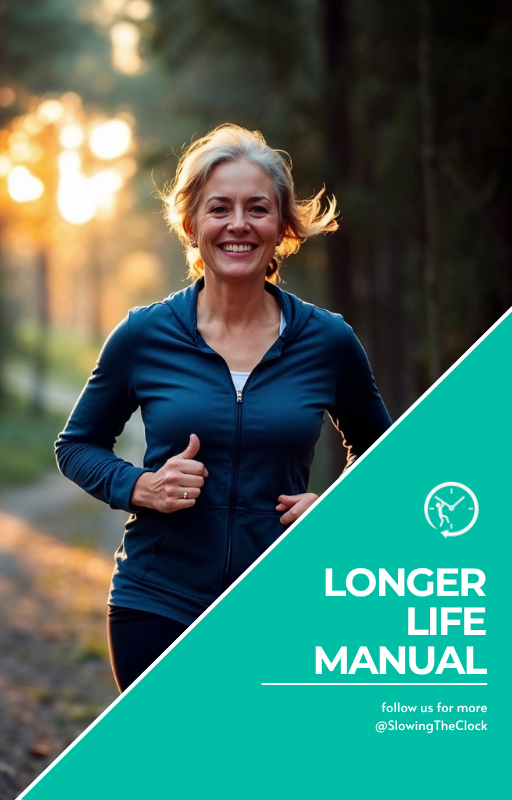
The longevity movement — and why this moment is different from every previous attempt to cheat death
Humans have always wanted to live longer. The ancient Egyptians had anti-ageing potions. Ponce de León went looking for a fountain of youth. The 20th century gave us vitamins, hormone replacement, and cryonics. Most of it amounted to very little.
So when people talk about a "longevity movement" today, scepticism is entirely reasonable. What's different this time?
Quite a lot, as it turns out. For the first time in history, we have a detailed molecular understanding of why we age — not just what ageing looks like from the outside, but what's actually happening inside cells. And that understanding is generating real, testable interventions. Some are already in human trials. The science is moving faster than at any point in history, and the people driving it are not mystics or marketers — they're some of the most rigorous researchers in biology and medicine.
That doesn't mean the hype should be believed uncritically. It shouldn't. But it does mean this moment deserves to be taken seriously.
Where it came from
The modern longevity movement has several distinct roots. Twin studies in the 1980s established something fundamental: that identical twins — people with essentially the same DNA — often age very differently depending on how they live. Genetics, it turned out, was far less determinative than assumed.
In 1990, the Nobel Prize in Physiology or Medicine was awarded for the discovery of telomeres and the enzyme that maintains them — establishing a direct molecular link between cellular division and ageing. In 2009, the Nobel went to three scientists who extended that work. The biology of ageing was becoming a serious scientific discipline.
The Blue Zones research of the 2000s added a different dimension — not laboratory science but field observation. Researcher Dan Buettner identified communities around the world where people regularly lived active, healthy lives into their 90s and beyond. Their longevity wasn't explained by genetics. It was explained by how they lived — what they ate, how they moved, how socially connected they were, what gave them a sense of purpose.
Then in 2013, a landmark paper in the journal Cell identified nine Hallmarks of Ageing — a unified scientific framework for understanding the biological processes that drive ageing. It gave the field a shared language and a shared map. Research accelerated.
What the movement actually stands for
Strip away the marketing — and there is a lot of marketing — and the longevity movement rests on a few core propositions that are worth taking seriously.
First, that ageing is a biological process, not an inevitability in the fatalistic sense. The rate at which it occurs varies enormously between individuals, and that variation is largely explained by lifestyle and environment rather than genetics.
Second, that the goal isn't simply more years — it's more good years. Healthspan over lifespan. The movement is explicitly not about adding years of frailty or dependence at the end of life. It's about compressing the period of decline.
Third, that prevention is vastly more effective than treatment. The conditions that shorten healthspan — cardiovascular disease, type 2 diabetes, certain cancers, cognitive decline — are largely preventable through lifestyle, and largely treated expensively and imperfectly once established. The economics of this are as compelling as the human argument.
'The longevity movement's most important insight isn't a new drug or a breakthrough technology. It's that most of what determines how well you age is within your control, and most of it costs nothing.'
The science at the frontier
This is genuinely exciting territory, and it's worth understanding what's actually happening rather than what's being sold.
Senolytics — drugs designed to selectively clear senescent cells from the body — are in human trials and showing early promise. The first clinical results in older adults suggest reductions in inflammation markers and improvements in physical function. This is early-stage research, but it's real.
Epigenetic reprogramming is perhaps the most radical area. Scientists have shown in animal studies that it's possible to partially reset the epigenetic clock — winding back some of the age-related changes in gene expression without erasing cellular identity. Human trials are beginning. The implications, if the animal results translate, would be profound.
NAD+ research continues to attract serious scientific attention. This molecule, central to cellular energy production, declines significantly with age. Whether supplementing its precursors has meaningful effects in humans remains genuinely contested — the early results are mixed — but the research is ongoing and credible.
What none of this adds up to yet is a proven way to reverse ageing in humans. The gap between promising laboratory results and proven clinical interventions is large, and the history of medicine is full of things that worked in mice and didn't work in people. Scepticism is appropriate. But dismissal would be equally wrong.
What this means for you right now
The frontier science is fascinating, but most of it isn't available to you today. What is available — and what the evidence consistently supports — is the same set of lifestyle fundamentals that the longevity movement keeps returning to, because they keep working.
Exercise, particularly strength training. Sleep of genuine quality and sufficient duration. A diet that reduces inflammation and supports metabolic health. Chronic stress managed rather than ignored. Social connection that goes beyond surface contact. These aren't exciting. They don't make headlines. But they have more evidence behind them than almost anything currently being sold as a longevity intervention.
The longevity movement at its best is an invitation to take your future health seriously — not by chasing every new supplement or biohack, but by understanding the science well enough to know what actually moves the needle. That's what this site is here to help with.
The Future of Longevity
The longevity movement is not just a passing trend—it’s a revolution in how we approach ageing. By embracing its principles, you can take control of your health and contribute to a world where growing older is something to celebrate, not fear. The future is bright, and the possibilities are endless.