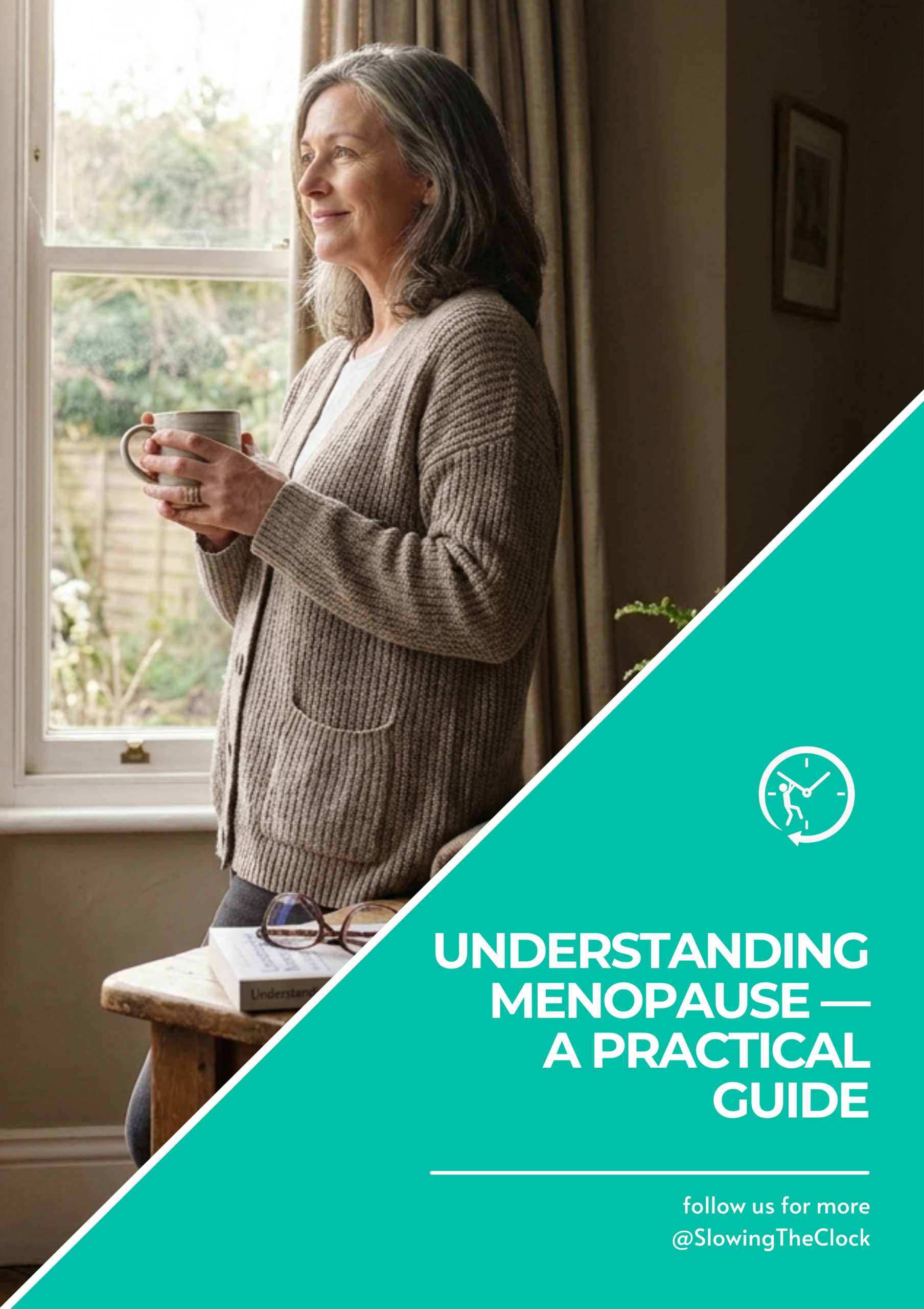
Understanding Menopause — A Practical Guide
Honest, practical information for women navigating perimenopause and menopause — what's actually happening, what genuinely helps, and how to get better care.
What's inside
- What perimenopause actually is — why symptoms typically start years before your last period, and why blood tests often miss it
- The full symptom picture — hot flushes, night sweats, brain fog, joint pain, mood changes, and the ones that rarely get talked about
- Why sleep is disrupted and what specifically helps — temperature management, alcohol, resistance training, and what generic advice gets wrong
- Food, weight, and metabolism — why your body composition may be changing and what the evidence actually supports
- Why resistance training is now the most important form of exercise — and what it does for muscle, bone, mood, and blood sugar
- HRT explained honestly — what it helps, what the real risks are with actual numbers, and the difference between older synthetic hormones and modern body-identical options
- How to have a better conversation with your GP — what to ask, what to push back on, and what good care looks like
- Perimenopause and mental health — why low mood and anxiety during this transition are physiological, not personal failure
Is this guide for you?
This guide is for women who want honest information about what's happening to their bodies — not vague reassurance, not a list of supplements, and not scare stories about HRT. Maybe you're in your early 40s noticing changes you can't quite name. Maybe you've been told your blood tests are normal but you feel anything but. Maybe you're already deep into the transition and want to understand it properly, or prepare for a GP conversation that's actually useful. Whatever stage you're at, this guide gives you the full picture — symptoms, causes, lifestyle changes, and treatment options — clearly explained.
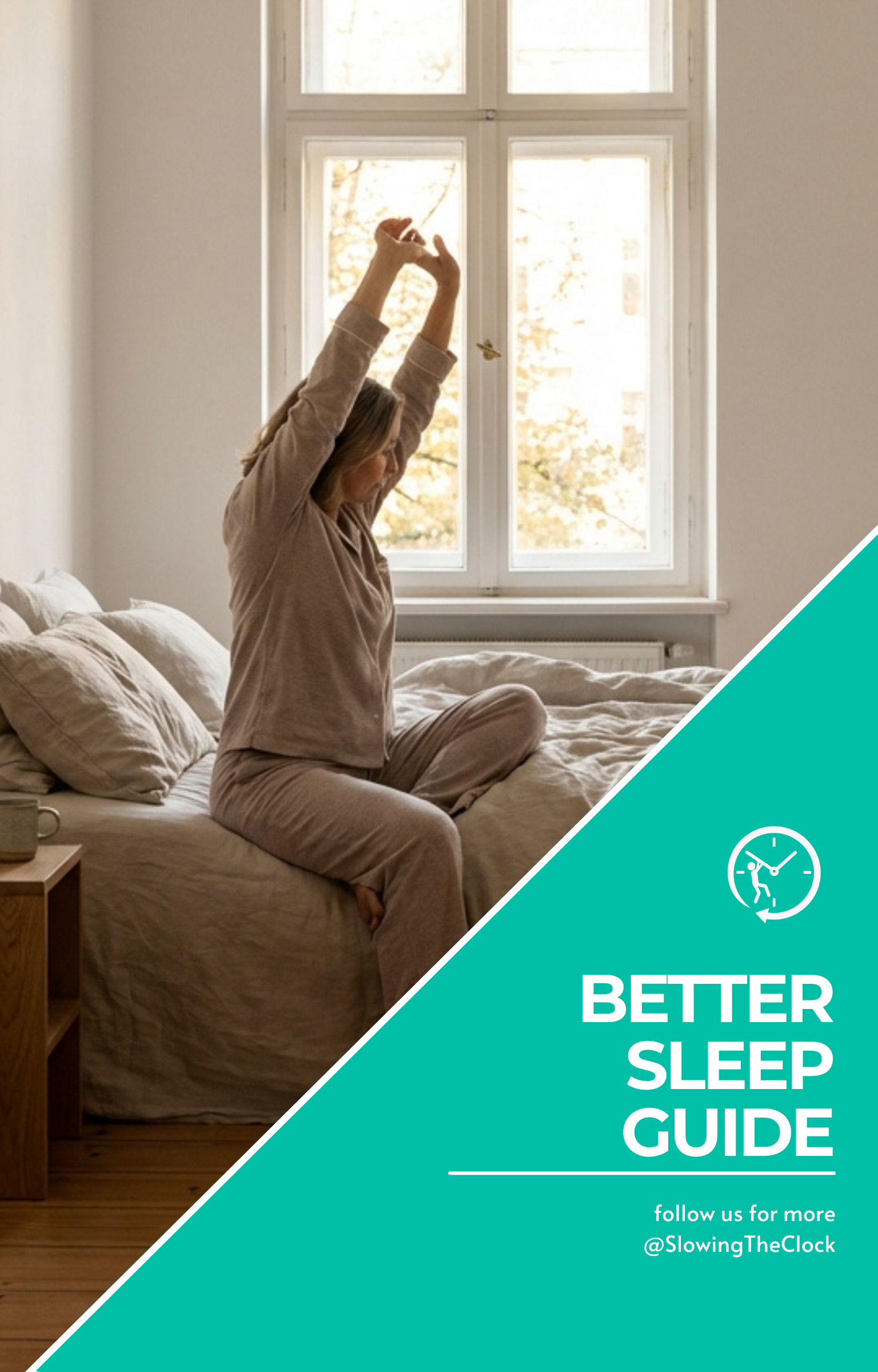
Save when you buy both
The Women's Health Bundle
Understanding Menopause + Better Sleep Guide — sleep disruption is one of the most common and debilitating symptoms of the menopause transition. These two guides work directly together.